EV Blanket 1

4x3m EV Lithium Battery Fire Blanket

SKU: LBB6143

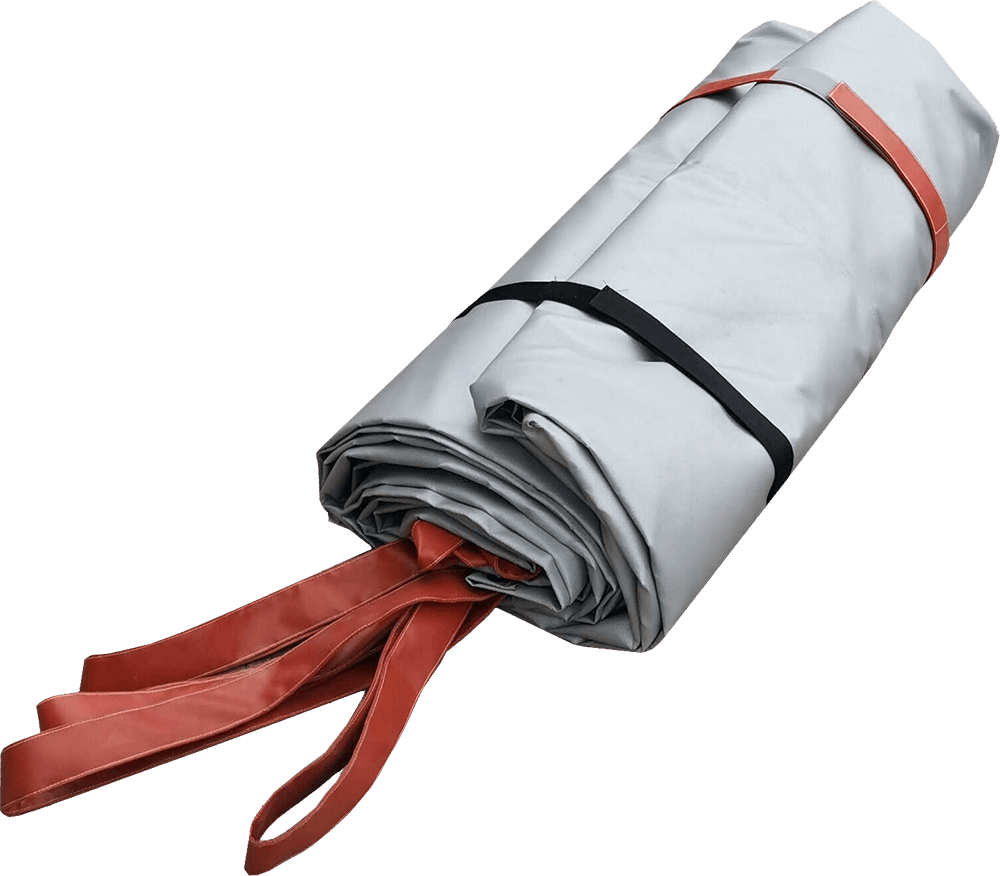
Designed to contain Electric and Hybrid Vehicle fires, the EV Lithium Battery Fire Blanket has been developed after many months of research and development.

The most common form of fire in electric or hybrid vehicles is when the high energy battery is damaged, or a manufacturing fault results in a short circuit. The battery can then go into “Thermal Runaway”, this is a phenomenon where damaged cells heat up rapidly to such an extent that a fire starts. The fire then compromises adjoining cells and a “domino effect” occurs spreading to the whole battery array.

Thermal Runaway fires cannot be extinguished by conventional means!

The electrolyte in a Lithium-Ion battery usually contains hydrocarbon solvents which fuels the fire. If unchecked extremely high temperatures can result.

Utilising an EV Lithium Battery Fire Blanket minimises the combustion potential by depriving the fire of Oxygen. This inhibits the fire and consequently temperatures drop rapidly, reducing potential damage to surrounding vehicles and property.

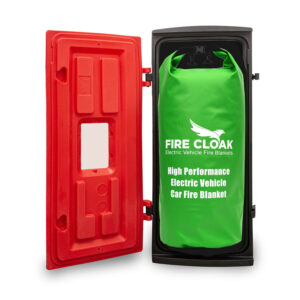
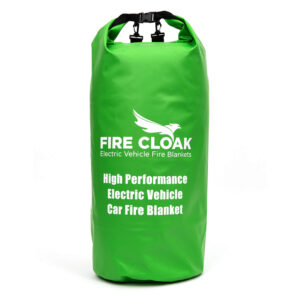
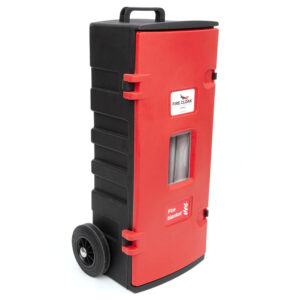
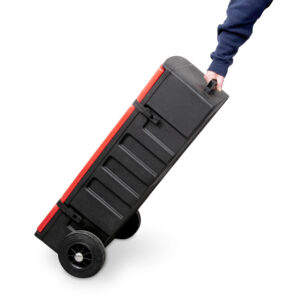
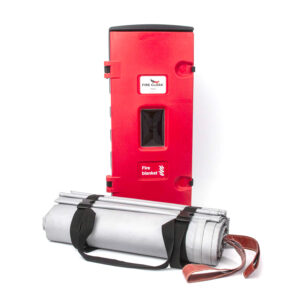
The EV Car Fire Blanket can be deployed easily by two people and is supplied in a convenient storage holdall for protection and ease of transport.

Material Description:

Ultra-high Silica content fabric with fire resistant grey silicone coating to both sides. Reinforced corners with heavy duty silicone fabric pull handles. All seams and handles stitched with high temperature resistant thread.

Dimensions: 4 x 3 metres – Weight: c.10.2Kg.

Material Specification

as per BS EN 112127:1998

PropertyUnitsValueTolerance
Weightg/m2700gsm± 5%
Thicknessmm0.65
Fire Resistant Coatingg/m2280 (140 each side)± 10%
Tensile Strength WARP – ISO 4606:1995N/5cm4000 N/5cm
Tensile Strength WEFT – ISO 4606:1995N/5cm2000 N/5cm

Material Data:

Temperature Resistance: Base fabric will withstand 1,000°C (unstressed)
Melting Point: >1,600°C
Shrinkage: <7%, tested at 900°C for 4 hours
StandardTestValueNotes
BS EN ISO 811: 2018Hydrostatic Pressure Test44cm/H2O (Mbar)avg. result
BS EN ISO 9237: 1995Air Permeability0.06mm/secavg. result
BS 7209: 1990Water Vapour Permeability187.2g/m2 WVPI 22.0%

Although not yet* tested to BS EN 13501-1:2018, and based on experience of this product type our technical fabric manufacturer is of the opinion that LBB6143 would achieve an A1 Reaction to fire classification.

*as at January 2024

PRODUCT GALLERY